

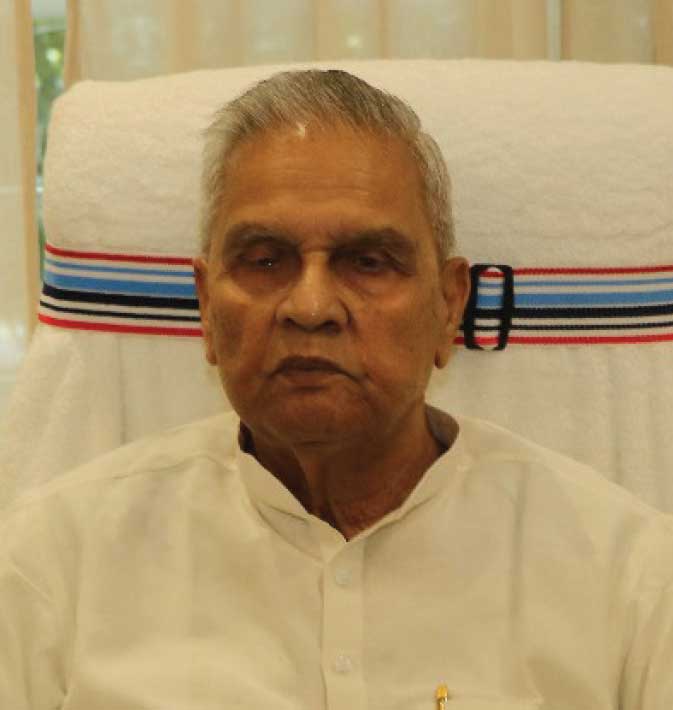
In an exclusive article for Renewable Watch, Bihar Energy Minister Bijendra Prasad Yadav talks about the transformation of the state’s power sector over the past two decades. He highlights the key milestones in electrification, the growth in infrastructure, the financial turnaround of the state’s discoms, and the push towards clean energy development…
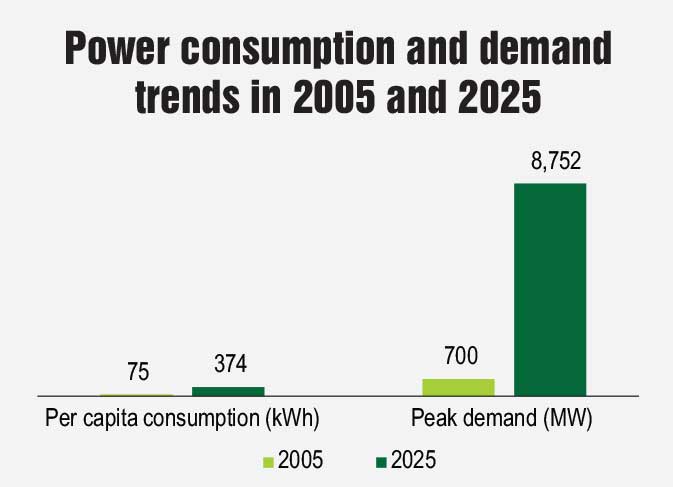
Since 2005, Bihar’s journey in the power sector has been a testament to insightful planning, prudent execution, efficient use of resources, relentless hard work and a strong will under the leadership of the Honourable Chief Minister, Shri Nitish Kumar. In 2005, it was unimaginable that by 2025, Bihar’s peak power demand would rise from just 700 MW to 8,752 MW, a 12-fold increase in just two decades, reflecting the scale of Bihar’s power revolution.
All of this is the outcome of the pledge made by the chief minister in 2012, “to ensure electricity for every household in Bihar”. Since then, the journey of the state’s power sector has been one of relentless progress and transformation. The commitment marked the beginning of a new era, driving continuous advancement and transformation.
Today, Bihar stands as a shining example for the entire nation in the fields of power generation, transmission, distribution and efficient management. Through the successful implementation of the Har Ghar Bijli Yojana, every village, every tola and every household in Bihar has been electrified, lighting up homes and lives across the state. The number of electrified villages in Bihar has nearly tripled in a span of 20 years, from 14,020 in 2005 to 39,073 in 2025.
Growth in the power sector: 2005 vs 2025
Between 2005 and 2025, Bihar’s power sector has experienced a transformative evolution, marked by significant advancements in household electrification and a massive increase in average electricity supply in hours. The availability of electricity in both urban and rural Bihar also signals the state’s new development trajectory. Frequent power cuts and load shedding are now a thing of the past. Today, not only are cities enjoying almost uninterrupted power supply, but villages, too, are receiving ample electricity. With reliable electricity, rural Bihar now boasts digital libraries and a thriving small and medium business ecosystem. Indeed, access to electricity is scripting a new chapter of development and prosperity across both urban and rural regions. Any supply disruptions are quickly addressed. Peak demand has surged, prompting a robust upgrade in both generation capacity and evacuation infrastructure. Per capita electricity consumption has also increased significantly, reflecting improved living standards, greater digital adoption and growing economic activity.
This remarkable growth would not have been possible without massive development in electricity infrastructure. Over the past two decades, there has been a multifold increase in infrastructure, which has played a crucial role in ensuring uninterrupted and reliable power supply across the state.
Supported by institutional reforms and modern infrastructure – including smart meters, energy storage and real-time grid monitoring – Bihar’s power sector now stands as a modern, resilient system powering inclusive development. There was a time when Bihar’s power discoms operated at significant losses. Today, Bihar stands among the very few states where power utilities are recording profits. With effective management, operational efficiency and financial discipline, the state’s discoms achieved a remarkable profit of Rs 20.79 billion in FY 2025.
Under the leadership of the honourable chief minister, concrete measures have been taken to ensure that electricity remains affordable for every category of consumer. During 2025-26, a subsidy of Rs 197.92 billion has been allocated under the Mukhya Mantri Vidyut Sahayta Yojana to support this vision. Notably, Bihar is the only state in the country offering advance subsidy, ensuring timely and direct benefits to consumers, and making power accessible and affordable across all segments.

Furthermore, in a landmark decision rooted in the vision of inclusive growth and social welfare, the Bihar government has announced the provision of 125 units of fully subsidised electricity per month to all domestic consumers, effective from August 1, 2025. It is set to benefit approximately 18.7 million households, covering nearly 90 per cent of total consumers in the state. However, consumption beyond 125 units will continue to be billed at prevailing subsidised rates, thereby ensuring continued affordability. This transformative initiative underscores the government’s unwavering commitment to the welfare of the common people.
For agricultural consumers, the fixed electricity tariff is Rs 6.74 per unit. Of this, the Bihar government provides a subsidy of Rs 6.19 per unit to farmers, which means they have to pay only 55 paise per unit. The agricultural sector, a key focus area, receives a subsidy of up to 92 per cent. Cold storage units will also be charged at the same rate, potentially reducing food storage costs and making agricultural produce more affordable. Agricultural consumers are being provided separate free electricity connections under the Mukhyamantri Krishi Vidyut Sambandh Yojana to facilitate irrigation.
The Bihar Electricity Regulatory Commission has adopted a cost-based tariff system since 2017-18, with the state bridging the gap through annual subsidies. Bihar is the only state offering tariff rationalisation, streamlining complex tariff categories to improve transparency and ease of understanding. This has resulted in better compliance and billing efficiency. Despite rationalised tariffs, the Bihar government has ensured minimal burden on end-consumers by providing advance subsidies. This makes Bihar one of the few states to offer such proactive financial support to maintain low consumer tariffs.
With over 7,000,000 smart prepaid meters already installed, Bihar leads the nation in digitalising and modernising distribution utilities. The state’s rapid implementation has attracted delegations from across the country, keen to study its model and approach. Today, Bihar stands as a national example in prepaid smart meter adoption, setting benchmarks for others to follow. The state’s achievements in smart meter implementation continue to receive appreciation on various national platforms. Recently, at the Regional Power Ministers’ Conference in Patna, the honourable union minister of power specifically praised Bihar for its swift and effective roll-out.
Bihar’s discoms have demonstrated remarkable progress in reducing aggregate technical and commercial (AT&C) losses. From a high level of 59.15 per cent in 2005, the state has shown consistent improvement, registering 45.41 per cent in 2012, 35.92 per cent in 2019-20 and 15.5 per cent in 2024-25, which is even below the national average of 17.6 per cent.
This exceptional achievement has been made possible through efficient utility management, continuous infrastructure development and large-scale implementation of smart prepaid meters.
Technological interventions in Bihar’s power sector
Significant strides have been taken to technologically empower the energy sector in Bihar. The introduction of geographic information systems, the establishment of an optic fibre communication network and the installation of high-capacity high tension low sag (HTLS) lines have enabled accurate digital mapping of the transmission network, substations and other assets. The implementation of the automated system balancing mechanism developed by the Bihar State Load Despatch Centre (SLDC) is a unique, first-of-its-kind application in the country, designed to enhance operations through automation and focusing on load curtailment to minimise deviation settlement mechanism charges, improve system balance, ensure real-time accurate data and feeder-level monitoring.
As a result of technological advancements and efficient management, the Bihar SLDC was honoured with the LDC Excellence Award at the National Power System Conference-2023. This prestigious recognition was awarded for the SLDC’s innovative efforts in power system management and cybersecurity, marking a significant achievement for Bihar in the national power landscape.
To safeguard the power infrastructure from cyber threats, cybersecurity protocols have been adopted, ensuring the integrity of digital systems and the safety of consumers. The Bihar State Power Transmission Company has become the first transmission utility in India to establish a Cyber Security Operations Centre. The use of HTLS conductors, monopoles and Optical Ground Wire (OPGW) technology has ushered in a new era of advancements in Bihar’s transmission infrastructure, enabling higher capacity, space-efficient installations and robust communication networks. Furthermore, the information security management system (ISMS) has been implemented, and it has been certified as per the ISO/IEC 270001: 2013 standards, reinforcing the sector’s commitment to data protection and secure operations.

Bihar has seen a significant increase in night-time lights, indicating economic growth according to ISRO’s Night Time Light [NTL] Atlas. ISRO’s National Remote Sensing Centre prepared the NTL Atlas, which uses satellite imagery to assess changes in night-time lights as an indicator of economic activity. Bihar has reported a notable increase of 474 per cent in night-time lights, exceeding the national average growth of 45 per cent. These statistics make it clear that Bihar has worked towards electricity reforms at a record pace in the past two decades.
The way forward
Powering industrial growth through energy security: With a strong and reliable power system now in place, Bihar is ready to enter a new phase of industrial growth. Today, consistent electricity supply is driving development. The state is preparing to expand industries such as agro-based units, food parks, logistics hubs and IT services across both rural and urban areas. Low electricity tariffs, steady power supply and smart energy planning have made Bihar an attractive place for investors. The solid foundation built over the past 20 years has now become a launchpad for long-term economic progress. Policy support, 24×7 power supply for industrial areas and dedicated infrastructure for Micro, Small, and Medium Enterprises (MSMEs) will help this growth, create more jobs and increase the state’s GDP.
Empowering Bihar with clean and affordable power: In a major step towards clean and sustainable energy, the Bihar government has announced a comprehensive solar energy initiative targeting domestic consumers. Over the next three years, all domestic households will be encouraged, through consent-based participation, to adopt rooftop or community-based solar power systems.
Consumers in the Kutir Jyoti category will be provided a 100 per cent subsidy for installing grid-connected rooftop solar systems, with the entire cost being borne by the state government. Other domestic consumers will also receive financial support to set up solar panels either at their homes or in shared community spaces. This integrated effort combining financial relief, clean energy promotion and long-term sustainability marks a vital step in Bihar’s journey toward equitable energy access and climate resilience. It not only supports the environment but also empowers rural communities, strengthening the government’s inclusive and forward-thinking development agenda.
Further, Bihar’s Renewable Energy Policy 2025 represents a future-focused shift towards sustainability and self-reliance. The policy sets an ambitious target of 11 GW of renewable capacity addition by 2030, with a major focus on rooftop solar, agri-solar, canal-top projects, floating solar and decentralised systems. Key incentives include a 50 per cent exemption on wheeling and transmission charges, electricity duty waiver for 15 years, 100 per cent State Goods and Services Tax (SGST) and stamp duty exemption, bankable feed-in tariffs for small projects and viability gap funding for storage-based systems. Land allocation within industrial parks and single-window clearances are also being facilitated.
Complementing this is Bihar’s Pumped Storage Plant Policy, which aims to add over 1.5 GW of storage capacity through hydro-based storage systems, crucial for balancing intermittent renewables. Together, these policies not only align with India’s net zero goals but also secure Bihar’s energy future, ensuring that as the state industrialises, it does so in a clean, efficient and equitable manner.


