By Priyanka Kwatra
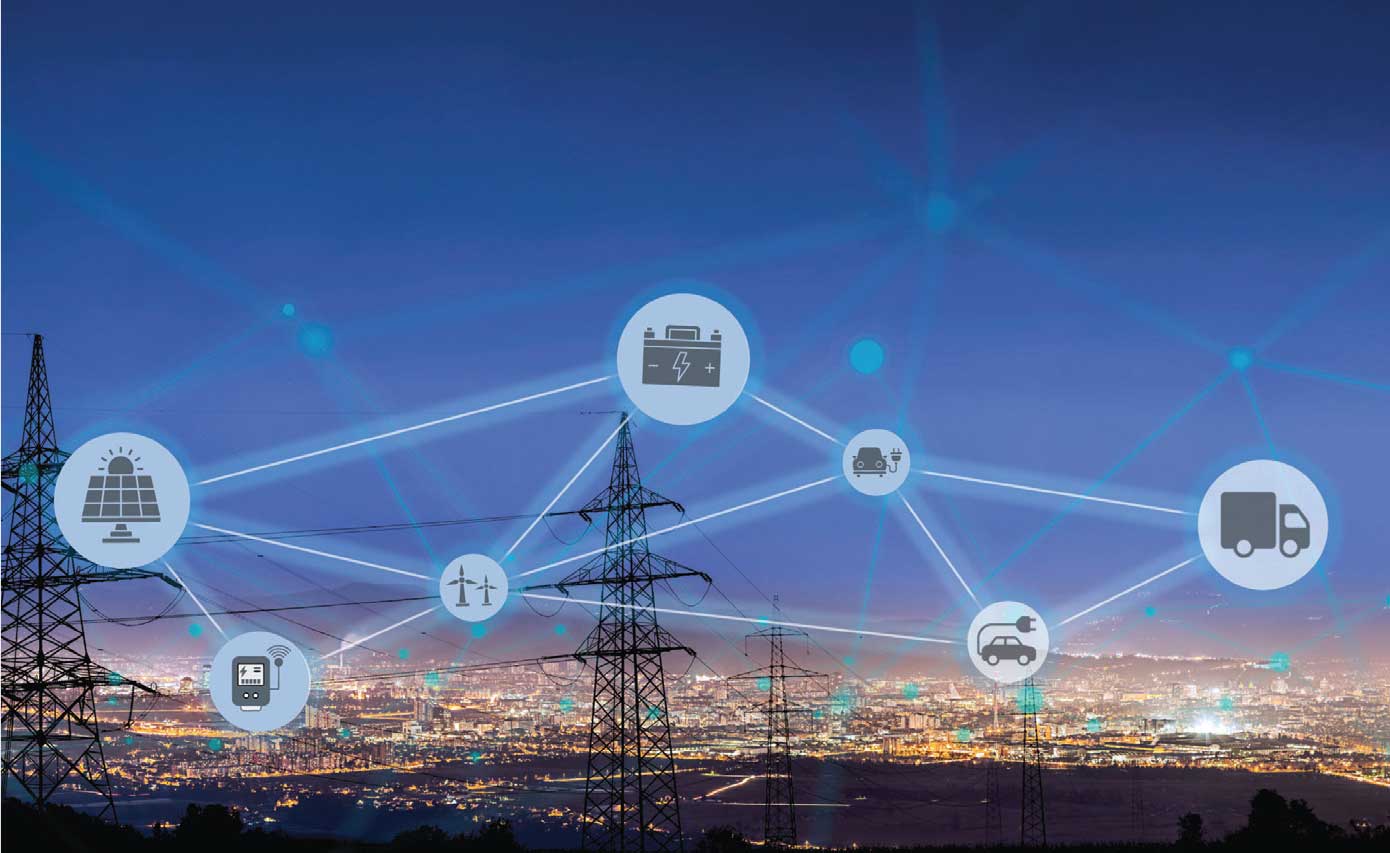 India’s power sector has been undergoing a digital transformation. While a range of technologies across the value chain have been deployed, most implementations have remained siloed – limiting their collective impact and resulting in fragmented information, limited visibility and operational inefficiencies. Now, as the sector prepares to scale up renewable energy integration, manage growing behind-the-meter assets, address rising power demand and progress towards net-zero goals, the need for a unified, interoperable digital infrastructure has become critical.
Building on the principles of Aadhaar and other digital public infrastructure models, the Ministry of Power (MoP) has announced the launch of a task force to develop the India Energy Stack (IES). The IES aims to introduce unique digital IDs for consumers, assets and transactions; open application programming interfaces (APIs) for seamless integration with legacy information technology-operational technology (IT/OT) systems; and a modular, plug-and-play architecture designed for scalability and cross-utility collaboration. It will serve as a standardised, secure framework for data exchange and monitoring across generation, transmission, distribution and end-user touchpoints.
Designed as part of the Revamped Distribution Sector Scheme, the initiative is being led by REC Limited as the nodal agency, with FSR Global as the knowledge partner. FSR Global has released a concept note outlining the proposed digital architecture and road map. A dedicated task force, supported by working groups from across the power ecosystem, has been constituted to define the framework and guide implementation. Nandan Nilekani, founding chairperson of the Unique Identification Authority of India (UIDAI), will serve as chief mentor. Ram Sevak Sharma, the first director general of UIDAI, will chair the task force; and Pramod Verma, chief architect of Aadhaar, returns in the same capacity for this initiative.
The MoP has launched a 12-month proof of concept, which will demonstrate the IES through real-world use cases in partnership with selected utilities. This includes piloting the Utility Intelligence Platform (UIP) – a modular, analytics-driven application to support utilities, policymakers and consumers with real-time insights and smarter energy management. The UIP is being piloted with discoms in Mumbai, Gujarat and Delhi. The expected outcomes include an IES white paper, platform design guidelines and a national roll-out road map. In parallel, a capacity-building programme is under way to equip discoms with the digital skills required for full-scale implementation.
Key components of the IES
The IES concept paper, released by FSR Global, outlines a three-layered digital architecture to serve as the backbone of India’s unified energy data infrastructure.
Core infrastructure: Digital registries and standardised protocols
The foundational layer of the IES will establish the digital backbone for the power sector. It will introduce open registries, unique digital identifiers for assets and consumers and uniform data exchange protocols. These will serve as the building blocks for enabling real-time visibility and cross-utility coordination, addressing the challenge of fragmented data silos and lack of interoperability.
Core services: Open APIs and data exchange
Open APIs will enable secure, standardised access to data and services across the energy ecosystem. The data exchange layer will facilitate seamless information sharing among utilities and other entities. Entity and payment management systems will support smooth transactions and unified registry operations. An integrated analytics engine will provide insights for grid management, billing and demand forecasting. Workflow automation will streamline key utility operations, improving efficiency and service delivery.
Enablers: Applications, software and innovation platforms
The IES will support the development of smart grid solutions for grid health monitoring, load forecasting and outage management. Consumer-facing applications and dashboards will offer real-time insights into electricity usage, help optimise billing and enable tracking of individual carbon footprints. Market-facing platforms for peer-to-peer (P2P) energy trading, green certificate exchange and dynamic price discovery will also be developed. Additionally, digital twins – virtual replicas of grid systems – will enable advanced simulation and planning to enhance system readiness.
Utility Intelligence Platform
As outlined in the IES concept paper, the UIP is envisioned as the intelligence and application layer of the IES, designed to translate digital infrastructure into realworld utility value. It will integrate legacy IT-OT systems, ensure data interoperability, and enable real-time grid visibility and analytics. The UIP will equip utilities with standardised tools for planning, forecasting and consumer engagement, while supporting features such as dynamic pricing, green tariffs and service portability. Through open APIs and shared data services, it will foster a plug-and-play ecosystem for innovators and solution providers. Pilots in cities such as Delhi and Mumbai will validate the UIP model, paving the way for a national scale-up. As the intelligence layer of the IES, the UIP is expected to drive sector-wide gains in efficiency, transparency and innovation.
Implications of IES
The IES is expected to have a far-reaching impact across the power sector by establishing a unified, open digital infrastructure that enables real-time data visibility, seamless interoperability and consent-based data exchange.
For generators and system operators, the IES will improve forecasting, renewable integration and analytics-driven operations. It will enable the registration, aggregation and market participation of distributed energy resources such as rooftop solar and storage.
For transmission utilities, it will enhance load despatch, dynamic line rating and real-time congestion management by integrating supervisory control and data acquisition (SCADA) and control systems with market and load data.
At the distribution level, discoms will benefit from visibility down to the feeder and consumer levels, enabling proactive fault detection, energy accounting and improved billing. Integration with smart meters will support time-of-day tariffs and consumer-centric services such as demand response.
For consumers, the IES will enable transparent and portable service experiences, including access to consumption data, billing, grievance redressal and green energy options through a unified digital identity. For industrial and commercial consumers, the IES could enable improved tariff design, access to real-time consumption analytics and streamlined energy procurement. Enhanced data transparency would support load optimisation, cost efficiency, and environmental, social and governance compliance.
In energy markets, the IES will improve scheduling and settlements, while enabling innovations such as P2P trading and energy fintech. It will form the digital foundation for a modern, flexible and consumer-centric power sector.
The way forward
Building on past experiences will be essential for the successful roll-out of the IES. Several states have already initiated stand-alone pilots to test digital energy platforms in real-world settings. A case in point is Uttar Pradesh, which piloted the Unified Energy Interface in Lucknow in 2020-21 for electricity billing and meter data exchange. This programme became the first live P2P solar energy trading pilot using blockchain technology.
Other states with advanced smart grid programmes have also contributed to the groundwork. Power Finance Corporation Limited and REC Limited have been supporting trials in areas such as smart metering, digital transformers and electric vehicle charging infrastructure – all of which align with the goals of the IES. On the system operations side, Grid Controller of India Limited is gradually integrating digital tools such as artificial intelligence-based forecasting and advanced SCADA systems, which are expected to interface with the IES.
The IES presents a transformative opportunity for the power sector. To enable effective implementation, coordinated action across stakeholder groups will be essential. Utilities and discoms must invest in IT-OT upgrades, adopt IES-compliant APIs, align devices to standard protocols and build the capacity to leverage real-time data. Active participation in pilot projects and strengthening cybersecurity readiness will also be critical.
Regulatory bodies such as the Central Electricity Regulatory Commission, the CEA and state electricity regulatory commissions must develop the requisite standards, regulations and operating procedures to enable seamless implementation. Technology providers should develop platforms compatible with IES standards and offer sandbox environments to drive innovation and experimentation.
Finally, engaging consumers in pilot programmes and encouraging the adoption of digital tools for billing, usage monitoring and energy management will be key to unlocking ecosystem-wide value.