
By Meheli Roy Choudhury, Research Consultant, Centre for Climate Change and Energy Transition, Chintan Research Foundation
India’s energy transition has twin pursuits, unfolding at a decisive moment, where deep decarbonisation is being aligned with the demands of industrial resilience, economic dynamism, innovation leadership, and national strategic autonomy. Central to this endeavour is the development of a robust battery ecosystem, underpinned by a secure and sustainable access to critical minerals such as lithium, cobalt, nickel, graphite and more which are the building blocks of modern battery energy storage systems. Today, the country remains heavily dependent on imports of these minerals, contributing to its energy insecurity and exacerbating the strain on foreign exchange reserves. The criticality of these minerals has been under persistent global spotlight due to their heightened role in energy transition, especially amid the rapid expansion of clean technologies such as electric vehicles, energy storage solutions and more. Nestled within a fragile geopolitical theatre, these minerals are increasingly subject to supply chain disruptions, price volatility, and strategic contestation, amplifying the urgency for India to secure resilient, traceable, and sustainable access. Traceability and standards-based markets for an ethical and resilient critical mineral supply chain were also the focal outcomes of the recently concluded G7 meeting in Kananaskis, Canada.
Securing minerals through traceability
Given the projected mineral demand vis-a-vis the reported global mismatch of their availability, India must urgently implement a mineral mapping system to trace sourcing, identify bottlenecks, and build resilient, just, and potentially substitutable supply chains. Furthermore, given the high cost of these minerals, reflected in the final price of products like EV batteries, urban mining emerges as a lucrative option to enable traceability and recycling. This can be expected to reduce prices and contribute to adding material to an already imbalanced supply corresponding to demand. This is vital for energy security, industrial competitiveness, and the country’s decarbonisation goals. The National Critical Mineral Mission (NCMM) has earmarked Rs 343 billion over seven years for domestic sourcing, recycling, and strategic imports, meaning India’s present limited reserves will remain essential for the foreseeable future.
In this evolving landscape, “Battery Passports” or “Battery Aadhar” — digital instruments that embed traceability, provenance, and environmental metadata throughout a battery’s lifecycle is a solution. Serving as a digital twin that follows the battery from its raw material sourcing to end-of-life management, it offers a compelling mechanism to institutionalise transparency, enhance circularity, and reinforce energy security. The European Union (EU) has the first mover advantage owing to the efforts of the Global Battery Alliance (GBA) in producing a benchmarking system to assess the ESG performance of companies in an independent third-party setup through a Battery Passport. With India’s established prowess in digital public infrastructure (DPI), we are uniquely positioned to utilise this technological offering, tailoring it to our needs, for a variety of reasons explained in the following sections.
Understanding Battery Aadhar
Originally conceptualised as the Battery Passport within the European Union’s battery regulation framework, this technology is gaining traction as a global standard for sustainable battery governance. In India, the concept of Battery Aadhar, as termed by NITI Aayog, holds strategic relevance going beyond regulatory compliances. It presents a chance to operationalise a more holistic critical mineral strategy which transcends mere resource acquisition and encompasses end-to-end value chain intelligence, lifecycle stewardship, and industrial localisation. While India has already articulated its critical mineral ambitions through the identification of 30 essential minerals and the establishment of Khanij Bidesh India Limited (KABIL) to secure overseas mineral assets, these upstream measures require complementary instruments that govern downstream traceability, recycling, and ethical sourcing. Battery Aadhar provides precisely such a framework.
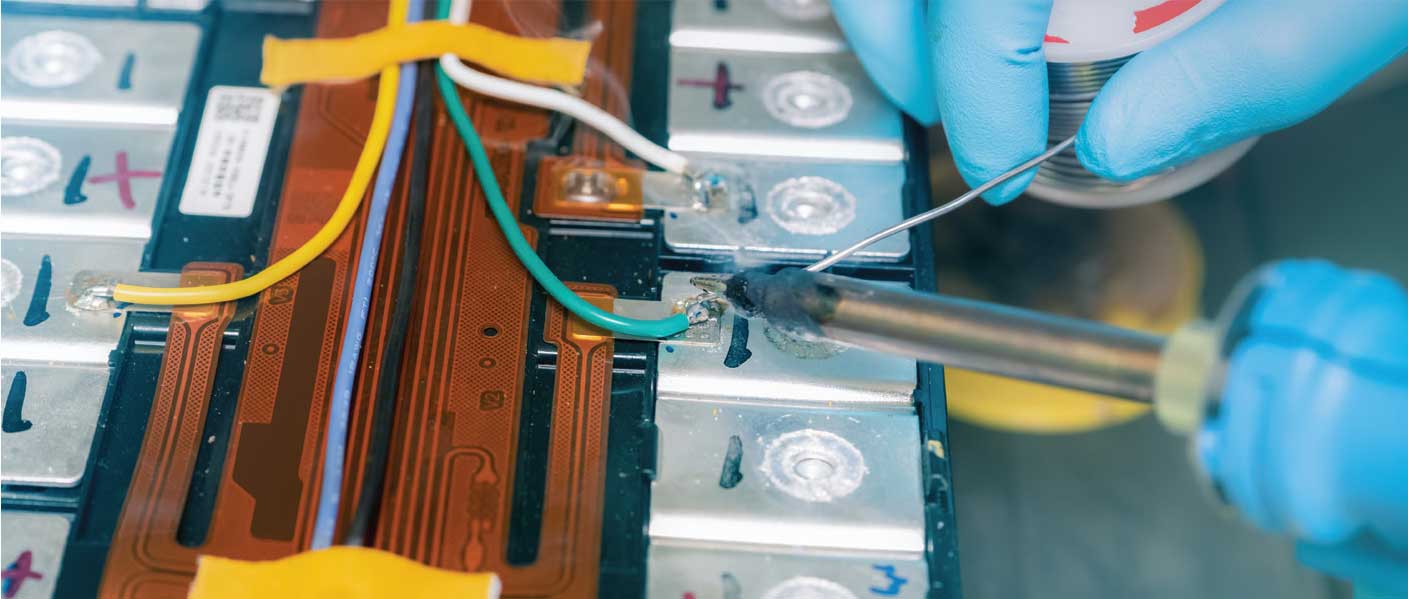
India’s critical tryst with Battery Aadhar
Integrating Battery Aadhar into the country’s critical minerals strategy would enable granular mapping of mineral flows, both domestic and transboundary, thereby informing policymakers about resource efficiency, beneficiation targets, and preferential market access. This would help India to set more realistic and strategic goals for domestic value addition and build capacities to reduce foreign dependencies. Traceability through Battery Aadhar would also allow policymakers to distinguish between responsibly sourced and high-carbon inputs as it carries information about the extractive processes of the minerals. These include human rights compliance with ethical labour codes, conditions of transportation, carbon and energy intensity during processing and refining till recycling, thus, combining the entire supply chain, which is currently opaque. One of the key attributes is the ability of Battery Aadhar to flag instances of exploitative practices reported in some regions which aligns with the G7’s push for responsible and transparent mining. As a result, it can help factor in due diligence from the origin of the entire value chain to its ultimate end – from the alpha to the omega.
By embedding battery chemistry, performance metrics, durability data, maintenance history, and end-of-life recycling protocols, it can catalyse a regulated battery recycling ecosystem. With a burgeoning material intensity of the economy, recycling is not a choice but an imperative for resource efficiency and cost control. India’s current recycling landscape is fragmented and embryonic, dominated by unregulated informal operations, the absence of reliable data, and lack of standardisation. Battery Aadhar can provide recyclers with information on battery chemistry, degradation profiles, and residual material value. This enables the emergence of a regulated secondary market for recovered critical minerals, thus fully embracing and propagating the principles of a circular economy. This has significant implications for raw material self-sufficiency and on reducing dependency on virgin mineral imports. Outbound, it allows for compliance, especially for Indian exports to the EU due to the Carbon Border Adjustment Mechanism (CBAM). Designed to enhance transparency, traceability, and accountability across the battery’s lifecycle, Battery Aadhar can enable India to provide differentiated fiscal incentives and integrate substitution measures. Crucially, it could also act as a de-facto certification mechanism for the country’s emerging battery manufacturing sector, aligning with evolving global sustainability norms, and reinforcing investor and consumer confidence.
Even if the battery is never exported, the raw minerals often sourced from geopolitically sensitive countries with reported exploitative supply chains can have tremendous environmental and social implications for India’s broader decarbonisation goals. Batteries made from untraceable or high-carbon inputs could be disincentivised, ensuring that public funds are directed towards promoting not just domestic manufacturing but ethical value chains as well. Additionally, by standardising data and ensuring interoperability with international platforms, Battery Aadhar can future-proof Indian manufacturers against emerging non-tariff barriers, particularly in markets such as the EU and East Asia. In fact, Battery Aadhaar can play a key role in addressing Scope 3 emissions, requiring data on the entire product lifecycle, which is difficult to track due to complex, cross-border supply chains in sectors like batteries and EVs.
To unlock its full potential, India must invest in the development of a robust digital and regulatory infrastructure for Battery Aadhar. It can be set up as a joint consortium under the banner of a National Battery Aadhar Framework, anchored by the Ministry of Mines. To uphold international and digital standards as well as account for domestic industry structures, the Department of Science and Technology, NITI Aayog, Bureau of Indian Standards, and the Ministry of Electronics and Information Technology can be the consortium members contributing their expertise richly. Such a tracking mechanism would greatly benefit battery manufacturers by providing verified information on the origin and sustainability credentials of their raw materials. This transparency will not only enhance supply chain integrity but also help in meeting compliance standards in export markets. Moreover, by integrating with global traceability systems, Battery Aadhaar can serve the interests of the government, industry, and consumers alike by enabling responsible sourcing, regulatory clarity, and consumer confidence in battery-backed technologies.
Technological platforms enabling real-time data capture, blockchain-based traceability, and cross-sectoral interoperability will be essential for the setting up of a Battery Aadhar system. Simultaneously, building institutional capacity, particularly among small manufacturers, recyclers, and state-level regulators, will be critical to ensure inclusive implementation.
Battery Aadhar represents far more than a digital compliance tool, it is a strategic enabler of India’s clean energy trajectory. By integrating material transparency, lifecycle governance, and supply chain accountability into the battery ecosystem, India can not only enhance its mineral security but also lay the groundwork for a competitive, circular, and resilient energy economy. As the global clean technology race intensifies, the country’s proactive embrace of Battery Aadhar could well determine its standing in the emergent global mineral-industrial order.