By Dr Debajit Palit, Centre Head, Centre for Climate Change and Energy Transition, Chintan Research Foundation, and Kartikeya Sharma, Postgraduate in Energy Management from the NTPC School of Business
India aims to become net zero by 2070 as part of its commitment to combat climate change. Recognising the potential of natural gas to reduce emissions, as compared to other fossil fuel sources, the government has set an ambitious target to augment its share in the energy mix from the current 6.5 per cent to 15 per cent by 2030. With domestic gas production failing to keep pace with rising demand, India has become increasingly reliant on imported liquefied natural gas (LNG). In 2024-25, India imported approximately 36.7 billion cubic metres (bcm) of LNG, accounting for around 50 per cent of the country’s natural gas consumption. Imported gas not only increases the final gas price for consumers, but it also exposes the country to global price volatility and geopolitical risks, posing a challenge to India’s energy security.
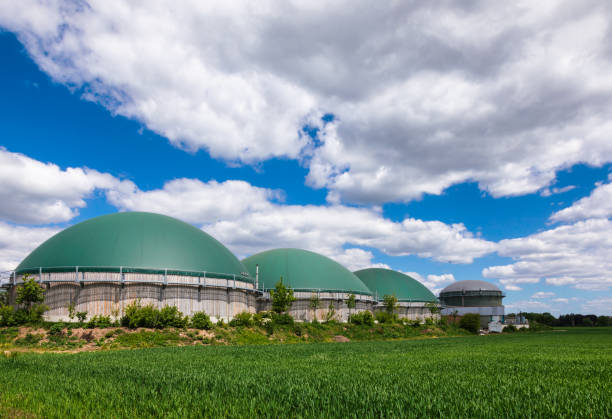
India is also currently facing a waste management crisis. Vast quantities of agricultural residues and municipal solid waste (MSW) remain unmanaged, contributing to pollution and methane emissions. Addressing these twin challenges, of ensuring energy security and addressing waste management, calls for innovative, integrated solutions. Compressed biogas (CBG) – a renewable fuel produced from organic waste – offers a viable solution.
This article explores the potential of CBG in tackling India’s energy and environmental challenges, identifies key barriers to its large-scale adoption (particularly in the biomass supply chain) and proposes a road map for scaling its production.
India’s LNG dependency and energy security risks
Natural gas plays a vital role in India’s energy portfolio due to its relatively cleaner combustion compared to coal and liquid fossil fuels. However, domestic production remains insufficient to meet the growing demand, pushing the country towards greater dependence on LNG imports. These imports not only subject India to global supply chain disruptions and price variations, but also require costly infrastructure investments, such as in import terminals and regasification units, which reduce flexibility and increase the financial burden. The International Energy Agency’s recent report, called the “India Gas Market Report: Outlook to 2030”, highlighted that the country’s current natural gas capacity, infrastructure and policies are insufficient to achieve the 2030 target. To achieve the target of a 15 per cent share of natural gas in the energy mix by 2030, India must increase its natural gas consumption to approximately 182.5 bcm per year. This would likely double import volumes by 2030, placing additional strain on the country’s foreign currency reserves.
Reducing this import dependency is crucial for achieving greater energy self-sufficiency and economic stability. CBG can play a complementary role in significantly mitigating these risks. Moreover, CBG fosters rural development by creating employment and offering supplementary income for farmers and other workers. Its decentralised production model can stimulate rural economic activity that typically lacks industrial investment. The digestate – a by-product of CBG production – can be processed into organic fertiliser, promoting sustainable agriculture and reducing dependency on chemical fertilisers. Readily available feedstock volumes indicate India could produce around 62 million metric tonnes (mmt) of CBG (approximately 86 bcm per year), enough to meet around 10 per cent of India’s current energy demand.
CBG: Clean, domestic and circular
CBG is produced through the anaerobic digestion of organic biomass such as crop residues, animal dung, sugarcane press mud and MSW, as well as energy crops such as Napier grass. The biogas produced contains approximately 55-60 per cent methane, 40-45 per cent carbon dioxide and trace amounts of hydrogen sulphide. Biogas is purified by removing carbon dioxide and hydrogen sulphide to increase the methane content to over 90 per cent, at which point it is referred to as CBG or biomethane. CBG has calorific value and other properties similar to compressed natural gas, and hence can be utilised as a green, renewable fuel. It is also commonly referred to as bio-CNG. After purification and compression, CBG has an energy value of around 47-52 megajoules (MJ) per kg, comparable to CNG and LNG at 54-56 MJ per kg. Like CNG, it can be transported through cylinder cascades or pipelines, and thus can be seamlessly integrated into the existing infrastructure and used across various applications, such as transport, industries and households.

Recognising its utility, the Indian government launched the Sustainable Alternative Towards Affordable Transportation (SATAT) initiative in 2018. SATAT aims to establish 5,000 CBG plants producing 15 mmt of CBG annually by 2025, potentially displacing 13.6 mmt of LNG and reducing LNG imports by roughly 60 per cent. Furthermore, to promote the production and consumption of CBG, the National Biofuels Coordination Committee, in November 2023, approved the phase-wise mandatory blending of CBG in CNG (transport) and PNG (domestic) within the city gas distribution (CGD) sector. The mandatory blending obligation has been set at 1 per cent, 3 per cent and 4 per cent of the total CNG/PNG consumption for FY 2025-26, FY 2026-27 and FY 2027-28 respectively. From FY 2028-29 onwards, the CBG blending obligation will be 5 per cent. The Indian Biogas Association estimated that blending 5 per cent of biogas with natural gas can reduce LNG imports worth $1.17 billion and can bring down per capita carbon emissions by 2 per cent, benchmarked to 2019 figures.
However, implementation has fallen short. As of April 2025, only around 100 CBG plants under the SATAT scheme and roughly 140 under the GOBARdhan scheme have been implemented – far below the initial targets. This underperformance highlights the challenges associated with financing, policy implementation and, most critically, the organic biomass supply chain.
Biomass supply chain bottlenecks
Despite its promise, India’s CBG sector faces significant biomass supply chain hurdles that inhibit scaling, such as:
Inconsistent feedstock availability: Agricultural waste is seasonal and region-specific. The lack of year-round supply affects the operational viability of CBG plants.
High transportation costs: Biomass has low energy density, making it expensive to transport over long distances. Most CBG plants must rely on nearby sources, limiting scalability.
Lack of storage and pre-processing infrastructure: Without adequate storage solutions such as silos or depots, feedstock degrades quickly. Limited pre-processing capacity reduces biogas output and plant efficiency.
Weak supply chain coordination: The informal nature of the biomass market results in unreliable procurement, inconsistent pricing and poor quality control. Many producers struggle to secure dependable long-term contracts.
These issues collectively hinder the scale-up of CBG projects and deter private investment. Thus, rather than viewing CBG as a complete substitute for LNG, a hybrid approach may be more practical for India. CBG can function as a supplementary fuel, especially in sectors such as transportation and CGD, where CNG infrastructure is already in place. This dual-fuel strategy will ensure a more balanced, resilient and sustainable energy system.
Scalable framework for CBG expansion
A study by the authors, using the analytic hierarchy process and qualitative survey of key stakeholders, identified five critical enablers for scaling CBG in India. They are demand creation for biogas; policy and regulatory support; efficient storage of feedstock; plant performance; and reduced logistics costs. Building on the findings, a three-pillar framework is proposed for scaling up CBG and bio-CNG production in India:
Optimising feedstock composition
The first step is mapping region-specific feedstock sources, such as crop residues, food waste and MSW, and establishing quality benchmarks. Moisture content, particle size and contamination levels should be standardised across collection centres to ensure consistent feedstock quality and to maintain a net energy ratio greater than one based on the feedstock used.
Co-digestion of multiple feedstocks, such as mixing animal dung with crop residue, improves biogas yields and operational stability. Training programmes for farmers, aggregators and plant operators can further enhance feedstock handling and storage practices.
Integrating FMCG-style logistics
India’s successful dairy and fast moving consumer goods (FMCG) supply chains offer a model for biomass logistics. Biomass aggregation hubs in rural and peri-urban regions can serve as collection and pre-processing centres. Reverse logistics can optimise vehicle utilisation and reduce costs. Technology can play a key role. Routing apps, scheduling tools and digital inventory systems can streamline operations, prevent spoilage and ensure timely feedstock delivery.
Leveraging existing infrastructure
The logistics network, including transport fleets and storage facilities, can be repurposed to support biomass movement for CBG production. The mandatory use of bio fertilisers, such as the bio-CNG mandate, could be explored alongside the tapering off of subsidies for the use of mineral fertilisers. Additionally, by-products such as organic fertilisers have export potential. Aligning CBG production with export-oriented value chains can unlock new revenue streams.
Role of policy and investment
Realising this integrated framework will require strong policy support and targeted investments.
Regulatory reform: Simplifying licensing processes, fast-tracking environmental clearances and establishing long-term pricing mechanisms may boost investor confidence, enabling easy integration with city gas networks. Further, strengthening coordination between multiple central and state government policies for MSW management, bioenergy, transport and agricultural waste can assist in expediting processes. A stable and predictable policy and regulatory environment will not only attract private players but will also ensure the long-term sustainability of the sector.
Financial incentives: Providing viability gap funding, concessional loans and tax benefits can help. It would be prudent to designate biogas as a priority sector within the green financing framework to ensure investments in the sector.
Infrastructure development: A collaborative approach involving private investors can help establish an environment for optimising the supply chain for feedstock and end products. The allocation of public funds for biomass storage facilities, transport vehicles and pre-processing equipment will encourage public-private partnerships for logistics development.
Programmatic alignment: CBG aligns with national initiatives such as Swachh Bharat (waste management), Atmanirbhar Bharat (self-reliance) and the net zero by 2070 road map. Additionally, convergence among various schemes such as SATAT, GOBARDhan and the National Bioenergy Programme can optimise resource use and produce better outcomes.
Conclusion
CBG offers a compelling opportunity for India to address two pressing challenges – reducing LNG import dependency and managing the burgeoning waste crisis. By achieving the goals of the SATAT scheme, India can significantly displace imported LNG while generating green jobs, lowering greenhouse gas emissions and promoting circularity.
However, CBG’s long-term success hinges on the development of a diversified and resilient biomass supply chain. A blended feedstock strategy that incorporates energy crops along with agricultural waste, food waste, MSW and other organic materials will ensure a stable biomass supply, leading to higher production and improved methane concentration.
To realise the full potential of CBG, India must address the supply chain challenges surrounding biomass sourcing, storage and logistics. A well-integrated approach, which involves leveraging diverse raw materials, supported by government policy, private sector investment and infrastructure development, will be key to sustainably scaling CBG production.
If implemented effectively, CBG can evolve from an alternative fuel to a strategic pillar of India’s energy and environmental future. By complementing LNG and green hydrogen, CBG can pave the way towards a more self-reliant, low-carbon energy economy.