

 By Radhika Choudary, Co-founder and Director, Freyr Energy
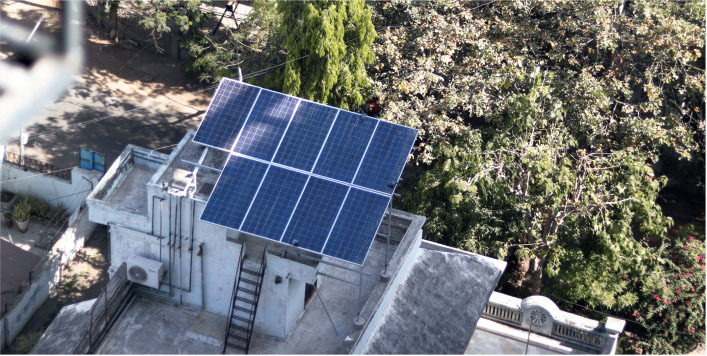
India has set ambitious goals for its transition to renewable energy, aiming to achieve about 50 per cent of the cumulative electric power installed capacity from non-fossil fuel energy sources by 2030. Rooftop solar systems are expected to play a significant role in this transition, providing a sustainable and decentralised energy solution. The widespread adoption of rooftop solar, however, hinges on the availability of effective financing options that make solar installations accessible to a broader segment of the population.
Policy framework
The Indian government has introduced a range of incentives and schemes to promote the adoption of rooftop solar systems such as the PM Surya Ghar Muft Bijli Yojana, which offers substantial capital subsidies to residential users. Homeowners in the general category states can receive up to 30 per cent of the installation cost as subsidy, while those in the special category states can benefit from subsidies of up to 70 per cent. The maximum subsidy can go up to Rs 78,000 for systems with a capacity of 3 kW and above.
 For commercial and industrial users, the Ministry of New and Renewable Energy (MNRE) provides attractive tax benefits, including accelerated depreciation rates of up to 40 per cent. This incentive allows businesses to recover their investments more quickly by reducing their taxable income, making solar installations a financially viable option. Moreover, these initiatives promote domestic manufacturing.
The launch of the PM Surya Ghar Muft Bijli Yojana has significantly increased customer interest in rooftop solar systems, making accessible financing more important than ever. To cater to this demand, banks and non-banking financial companies (NBFCs) in India have introduced specialised loan products that reduce upfront costs and make solar installations more accessible. These options include zero-cost EMI plans and collateral-free loans, with NBFCs offering quick approvals—sometimes within minutes—ensuring a smooth and seamless transition to solar energy.
For instance, the Union Bank of India’s Union Rooftop Solar Scheme (URTS) offers loans of up to Rs 1.5 million for systems above 3 kW, while the State Bank of India provides solar rooftop finance, covering up to 80 per cent of the installation costs with flexible repayment periods ranging from three to 15 years. Meanwhile, the Punjab National Bank offers financing for rooftop solar power systems, with loans of up to Rs 600,000 for systems above 3 kW. This option is particularly useful for homeowners who may require a smaller loan amount to finance their solar installation.
Similarly, many NBFCs’ solar loans serve residential, commercial and industrial customers with fast approvals and zero-cost EMI. In addition, options such as Electronica Finance Limited provide the Surya Shakti Loan, which caters to residential, commercial and industrial customers. This loan product is flexible and can be tailored to meet specific needs of different types of users, whether they are individual homeowners or large businesses.
Challenges and the way forward
 Despite these efforts, challenges remain, particularly in raising awareness about the available financial support. A 2021 survey by the Council on Energy, Environment and Water revealed that nearly 40 per cent of households are unaware of the financial incentives for rooftop solar. This lack of awareness is a major barrier to the widespread adoption of rooftop solar systems. Additionally, borrowers with lower credit scores often struggle to secure loans, limiting access for lower-income households.
Another challenge is the complexity of the loan application and the approval process. The paperwork and documentation required for securing a loan can be cumbersome, deterring potential users from pursuing solar installations. Simplifying the loan application process and increasing awareness through campaigns could help overcome these barriers. Government initiatives, combined with increasing awareness of the benefits of renewable energy, are driving the growth of the solar market. As technology advances and the cost of solar installations continues to decrease, the financial viability of rooftop solar projects will improve, making them more attractive to a broader audience.
The future of rooftop solar financing in India is bright, with innovative financial models revolutionising how solar energy is produced, consumed and traded. Among these, peer-to-peer (P2P) solar energy trading is gaining traction. This model enables homeowners and businesses with solar installations to sell excess energy directly to other consumers through blockchain-based platforms or smart contracts. By decentralising energy distribution, P2P trading reduces reliance on traditional power grids, provides a new revenue stream for producers and offers consumers access to renewable energy at competitive prices. This local energy marketplace also enhances grid resilience and promotes greater energy independence.
Virtual power plants (VPPs) are another emerging trend that aggregates the output of multiple small-scale solar installations to function as a single power plant. VPPs improve the reliability of solar energy by balancing supply and demand in real time and providing essential grid services such as frequency regulation. This model not only maximises the utilisation of distributed solar resources but also helps integrate more renewable energy into the national grid, supporting the transition to a greener energy future. Consumers participating in VPPs can earn additional income, making solar investments even more attractive.
Further, solar leases offer an alternative financing option for those who want to avoid the high upfront costs of solar panel installation. Under this arrangement, a third-party company installs and maintains the solar panels, while the homeowner pays a monthly lease fee, often lower than their traditional energy bills. This model lowers the barrier to entry, making solar accessible to a broader demographic, including those with limited capital.
As India’s rooftop solar market matures, continuous innovation and supportive policies will be crucial, such as mandating rooftop installations for specific buildings. These measures will ensure that solar energy becomes available to all segments of society, contributing to India’s renewable energy goals and a sustainable future.
