As India moves towards its energy transition goals, the role of distributed clean energy systems and battery storage becomes more critical, to ensure optimal utilisation of resources and infrastructure and make clean energy accessible and affordable for everyone. To this end, the Global Energy Alliance for People and Planet (GEAPP) is a collaborative organisation that helps bring clean, reliable and affordable energy to communities in emerging economies. After heading Energy Efficiency Services Limited for nearly a decade, Saurabh Kumar is now vice-president – India, GEAPP. In an interview with Renewable Watch, he talked about the importance of decentralised renewable energy (DRE) for India, key challenges and required policy drivers…
What benefits do distributed renewable energy systems provide over utility-scale projects?
When compared to conventional utility-scale projects, DRE systems provide several benefits. These systems significantly lower the energy losses connected with long-distance transmission by being located at or close to the point of consumption, guaranteeing higher energy efficiency. Due to its scalability and modular design, it can be precisely adjusted to meet the unique energy requirements of various communities, enabling the creation of flexible and efficient custom solutions.
For the local populace, DRE is an economically viable choice because it decreases energy losses, which directly translates into lower overall prices for renewable energy. Furthermore, DRE programmes stimulate regional economic development by generating green jobs related to the set-up, upkeep and administration of these systems. Transitioning to clean energy will create multiple direct and indirect green jobs, significantly boosting employment opportunities in renewable energy sectors. This shift encourages private sector investment and boosts domestic manufacturing, further promoting economic development, particularly in rural areas. As the world increasingly shifts towards sustainable energy sources, the rising demand for skilled labour in the renewable energy sector presents a significant growth opportunity. In addition to fostering environmental sustainability, this concentrated employment fosters community development. DRE systems, in general, greatly enhance energy efficiency, offer customisable and scalable solutions, reduce community energy costs and stimulate local economies, positioning them as a superior alternative to large-scale utility projects.
Which of these has the highest potential to grow – solar pumps, agri PV or floating solar?
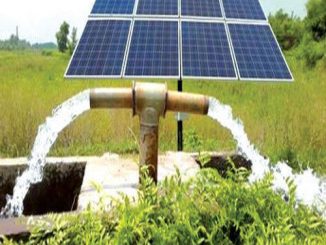
With 42-43 per cent of India’s population engaged in agriculture, integrating renewable energy into this sector presents a significant opportunity. DRE, such as solar pumps, offers substantial benefits beyond reducing reliance on traditional fuels. It significantly enhances environmental sustainability by lowering greenhouse gas emissions and reducing air pollution. By decentralising energy generation, DRE also relieves pressure on centralised power plants, which are sources of fossil fuel emissions. This decentralisation improves local air quality and mitigates climate change impacts, aligning with global efforts to limit temperature rise.
Moreover, DRE promotes cost-efficiency by delivering energy directly at the point of use, eliminating the need for costly transmission and distribution infrastructure. Technologies such as solar pumps not only lower energy costs for farmers but also enhance economic resilience by reducing dependency on fluctuating fossil fuel prices. Digital monitoring platforms associated with DRE further optimise energy usage, offering substantial savings and operational efficiencies for agricultural enterprises. Embracing DRE solutions in agriculture not only bolsters India’s energy security but also fosters sustainable economic growth while aligning with global climate objectives.
How does India’s DRE policy framework compare with other important DRE markets? What are the key challenges limiting the uptake of DRE systems?
India’s DRE policy framework stands as a beacon among the emerging economies. Evolving from initial stages focused on subsidies and pilots, India has matured its approach, focusing on the scaling up of renewable energy initiatives. This strategic shift has not only resulted in India emerging as a cost-effective leader, offering a 30 per cent cost advantage over markets such as South Asia and Southeast Asia, but also bolstering local production and manufacturing through supportive policies. By leveraging economies of scale and promoting local manufacturing, India’s DRE policies stimulate upstream production while enhancing competitiveness globally. Despite these strengths, challenges such as regulatory complexities, intermittent policy implementation, grid integration readiness, financing barriers and technical capacity gaps persist, particularly in rural areas. Addressing these challenges through streamlined regulations, improved grid infrastructure and enhanced access to finance and technical expertise will be crucial in accelerating the widespread adoption of DRE systems across the country, solidifying its position as a leader in DRE innovation and deployment.
What is the outlook for BESS in India, considering the cost viability with respect to pumped storage projects? What are the major growth drivers and barriers?
The future of battery energy storage systems (BESSs) in India is promising, driven by the need to achieve 50 per cent electricity generation from non-fossil sources. With variable renewable energy constituting about 12 per cent of the country’s energy mix and certain states surpassing 25 per cent, substantial energy storage is urgently needed. The Central Electricity Authority projects that India will require 47 GW of BESS by 2032. With a faster-than-anticipated demand increase (peak demand may exceed 400 GW by 2032 instead of the previously forecasted 384 GW) and cost reduction in lithium-ion BESS, the requirements may well exceed 47 GW. Recently, there have been over 3 GW of BESS tenders, aimed at co-located renewable energy plus BESS projects and stand alone BESS projects, though many are still pending financial closure and regulatory approval. BESS is becoming increasingly cost-competitive compared to pumped storage projects due to declining technology costs, greater flexibility and significantly shorter gestation time (12-18 months for BESS, as compared to five to 10 years for pumped storage projects. Growth drivers include the need for grid stability, stricter enforcement of renewable purchase obligations (RPOs), supportive government policies, financial incentives such as viability gap funding (VGF), and local manufacturing initiatives. However, barriers such as high upfront costs relative to the existing portfolio mix (for non-renewable energy-rich states), regulatory challenges, and the slow adoption of BESS should be addressed through streamlined regulations and monetisation frameworks, enhanced financial mechanisms and increased stakeholder capacity in order to accelerate BESS integration into India’s power system.
What measures need to be taken to promote BESS uptake in India?
To promote the uptake of BESS in India, the government has implemented significant policies, such as defining energy storage systems, extending renewable energy benefits, providing subsidies and setting market development targets. The National Framework for Promoting Energy Storage Systems, released by the Ministry of Power in August 2023, outlines a comprehensive road map, with significant initiatives such as the Rs 94 billion VGF for 4 GWh of projects for boosting the BESS market. The first tender under the VGF scheme was recently released for 500 MWh of capacity. However, technical integration into the grid requires greater focus, as BESS remains novel to many stakeholders. Building institutional knowledge and enforcing regulations for state-level entities, including discoms, state regulators and state load despatch centres, are crucial. The Forum of Regulators’ 2022 report lays a foundation, but further regulatory development is needed to enable BESS participation in ancillary markets and to create robust resource adequacy frameworks, ensuring long-term investment and integration of energy storage technologies into India’s power system.
How has the DRE financing environment evolved in India? What are the major instruments for financing such projects?
The financing environment for DRE in India has evolved significantly, transitioning from a reliance on grants to a more diversified mix involving commercial debt and equity. This shift has been supported by a reduction in the perception of high risk associated with DRE projects, leading to a considerable decrease in the cost of capital. Commercial financial institutions are increasingly willing to invest in the sector, supported by government policies that incentivise green projects. However, risk perception remains a challenge, particularly in rural applications. To address this, development finance institutions and philanthropies such as GEAPP are introducing financial guarantee instruments to mitigate perceived risks. Furthermore, the central government’s mandates to nationalised financial institutions and banks are reinforcing the focus on financing the renewable energy sector, thereby facilitating broader access to capital for DRE projects across India. Major instruments for financing DRE projects include commercial loans, equity investments, government incentives such as subsidies and tax benefits, and emerging financial guarantee mechanisms aimed at de-risking investments in the sector.
What regulatory provisions are required to attract more investments?
To attract more investments in DRE and renewable energy sectors, regulatory provisions must pivot towards complementing, rather than competing with, the existing grid infrastructure. Emphasising this synergy not only supports national goals such as achieving 500 GW and net-zero targets but also requires regulatory adjustments. Specifically, regulators should consider making RPOs more stringent to ensure effective compliance. Currently, there is a lack of both incentives and penalties, which hinders investment confidence. Establishing clear exit routes for projects that do not succeed is essential to mitigate risk and instil investor confidence. Moreover, introducing mechanisms such as carbon credits can create new value streams, enhancing the attractiveness of investments in DRE and renewables. By addressing these regulatory needs, India can foster a conducive environment for increased investments in sustainable energy solutions, driving progress towards ambitious energy and climate goals.
What work has GEAPP done in this space globally and in India?
GEAPP has made significant strides in India and globally by focusing on reducing carbon emissions, providing reliable access to energy and creating green jobs through solutions such as DRE and BESS. Globally, GEAPP collaborates with like-minded partners to implement scalable and sustainable programmes that support countries in achieving their energy transition goals. In India, GEAPP has prioritised initiatives such as solarising agriculture, aligning with government efforts under programmes such as the PM Suryoday Yojana and PM-KUSUM. Additionally, they actively support gender-led enterprises and spearhead BESS initiatives.
A prime example of GEAPP’s impactful work is its strategic partnership with Mahatma Phule Renewable Energy and Infrastructure Technology Limited to implement 1,000 MW of solar projects across Maharashtra. This includes 500 MW of rooftop solar for small-and medium-sized enterprises and 500 MW of ground-mounted decentralised solar under the PM-KUSUM scheme. Another significant development is the BESS project in Delhi, where GEAPP is collaborating with BSES Rajdhani Power Limited, IndiGrid and AmpereHour. Having received regulatory approval recently from the Delhi Electricity Regulatory Commission, this project will become India’s first stand-alone commercial BESS project, also a first for South Asia, benefiting over 100,000 consumers.
By working closely with state and central entities, GEAPP is playing a crucial role in advancing India’s renewable energy agenda and fostering sustainable development across the country. Their initiatives demonstrate the potential for large-scale renewable energy integration and set a precedent for future projects in the country.