

India’s green hydrogen sector is gathering momentum, driven by the country’s abundant renewable energy resources, growing industrial demand and emerging export opportunities. Leading developers are investing in the large-scale production of green hydrogen and its derivatives, including green ammonia, green methanol and sustainable aviation fuel (SAF), while simultaneously building electrolyser manufacturing facilities. Despite this momentum, the sector faces persistent challenges. Limited long-term offtake agreements, high production costs and the need for harmonised global standards remain key constraints. Going forward, supportive policies and targeted subsidies will remain key to scaling up domestic demand and attracting investment. At Renewable Watch’s 10th edition of the “Green Hydrogen in India” conference, senior executives from leading renewable energy developers shared their strategies, project progress and perspectives on the opportunities and hurdles shaping India’s green hydrogen ecosystem. Edited excerpts…
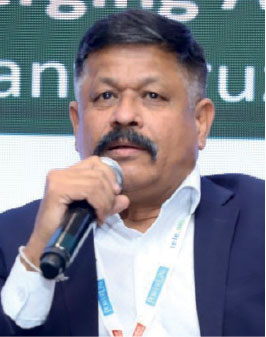
Prashant Choubey
The Avaada Group is expanding beyond renewables into green hydrogen, green ammonia, SAF and green methanol. The company has set up several large-scale renewable projects and now has strong upstream module and cell manufacturing capabilities as well.
Avaada is developing a 0.5 million tonnes per annum green ammonia project on India’s east coast in Gopalpur, Odisha. The front-end engineering design for the project has been completed, and the engineering, procurement and construction management contract is under finalisation. Basic construction activities have already begun at the site.
While global developments and geopolitical uncertainties have slowed offtake momentum, the situation is improving, with more concrete offtake discussions under way. Avaada expects to finalise offtake agreements in the coming months.
In the recent green ammonia auction for 13 fertiliser plants, the discovered prices were highly competitive. Going forward, the real test will be the execution of these projects, which will send a strong signal for the sector’s growth. India’s low-cost renewable energy provides a major competitive advantage. The next round of tenders is expected for green methanol sourcing, further boosting market visibility. Overall, the key demand drivers for hydrogen and its derivatives are likely to come from the refining, steel and fertiliser sectors.
Current green hydrogen production costs depend on electrolyser technology. Alkaline electrolysers, with 60-70 per cent efficiency and a lifespan of 90,000 hours, are more mature. Proton exchange membrane electrolysers offer higher efficiency but are limited by shorter lifespans and dependence on imported critical minerals. Solid oxide electrolysis remains at the pilot stage.
Further, the transition will require strong safety frameworks and workforce skills. Hydrogen purchase obligations, similar to renewable purchase obligations, viability gap funding and harmonised global standards, will be key for sector growth going forward.
Policies must remain stable over the long term to ensure investor confidence and avoid the policy flip-flops seen in the early renewable sector years. Akin to the prime minister’s announcement several years ago of a 100 GW solar target that once seemed unachievable but is now a reality, the green hydrogen ecosystem will also scale up over time with consistent policy and ecosystem development.
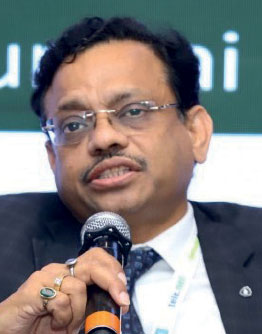
Samir Saxena
ReNew established its green hydrogen vertical three years ago and has since made significant progress in project development. The company is developing a large green hydrogen and ammonia project at Paradip in Odisha and has received certification from CertifHy, which is Europe’s leading voluntary scheme for renewable hydrogen. The company is also working on two additional projects in Odisha focused on green methanol, which is a valuable feedstock for SAF.
Beyond Odisha, ReNew is planning projects in southern India and exploring collaborations in Europe for SAF development. The company initially evaluated opportunities in the US but found market conditions less favourable. ReNew aims to build a global footprint, targeting export markets in Europe and Southeast Asia, Korea and Japan.
India is evolving from being seen solely as a developer to becoming an emerging offtaker of green hydrogen, with recent domestic tenders signalling stronger demand. However, the lack of firm offtake commitments remains a critical challenge, delaying project timelines.
The country’s cost economics position it midway between low-cost and high-cost producers globally. India is expected to become a major exporter of hydrogen derivatives, given Europe, Japan and Korea’s strong decarbonisation mandates.
The global market still faces challenges from non-uniform carbon intensity regulations. The European Union has stringent RFNBO (renewable fuels of non-biological origin) standards, while Japan and Korea maintain more flexible criteria, creating confusion for developers targeting multiple export markets. As the industry matures, harmonisation will improve and trade in green molecules will accelerate.
Going forward, mandates for green hydrogen use will eventually become a part of India’s broader decarbonisation strategy. Such policies are necessary for both environmental and economic sustainability, and will receive industry support once clarity and consistency are ensured.
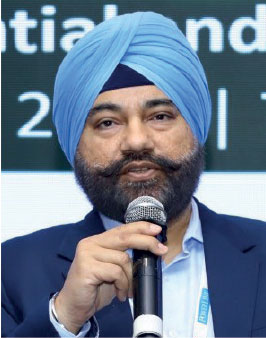
Inderjeet Singh
Under the business vertical of Adani New Industries Limited, the group is developing three key business lines – electrolyser manufacturing, battery energy storage systems (BESS) and green hydrogen with its derivatives. The company plans to establish a large-scale green hydrogen and ammonia production facility on the Indian west coast.
Adani plans to go ahead in a phased manner. The first phase targets 0.2 million metric tonnes (mmt) of hydrogen, which equates to 1 mmt of green ammonia, requiring approximately 4 GW of renewable energy. The project is planned for commissioning by 2030. However, long-term offtake agreements remain a key challenge for scaling up the green hydrogen sector.
In parallel, Adani is moving rapidly on the BESS front. The first phase of its 3.5 GWh BESS project is scheduled for commissioning in the first quarter of 2026, with a broader target of 15 GWh by early 2027. This project is at an advanced stage and will serve as a demonstration of large-scale BESS deployment.
Adani has already commissioned a 5 MW alkaline electrolysis stack to gain operational experience in hydrogen production, which has helped refine its design and process concepts. Engineering partners such as Worley and Toyo Engineering (Japan) are supporting project development. Electrolyser manufacturing is progressing slower than expected.
Land for GW-scale factories has already been acquired, although manufacturing facilities will take time to materialise. For the first phase, the company plans to procure electrolysers from the open market rather than integrate in-house products. Going forward, Adani aims to deliver hydrogen and ammonia molecules at globally competitive prices.
