


By Nidhi Dua
As of April 2024, India boasts a combined installed capacity of 191.67 GW from renewable energy sources, with solar power contributing significantly at 82.63 GW as per the recent statistics from the Ministry of New and Renewable Energy (MNRE). The journey towards sustainable energy transition in India has been marked by the emergence of certain states as pioneers in the nation’s solar revolution. These states have implemented visionary policies and initiatives to leverage their solar potential and accelerate the adoption of solar power. Crafting and implementing technically sound policies are essential for successful progress, yet it constitutes just one aspect of the broader equation. States like Rajasthan, Gujarat, Tamil Nadu, and Karnataka have emerged as leaders in solar power not only due to their solar policies but also owing to several other critical factors.
Interestingly, these states also rank among the top 10 Indian states in terms of GDP according to the RBI’s Gross state domestic product (GSDP) data. Strong GDP numbers are also an indication of greater economic strength and hence these states are better positioned for development of renewable energy projects as compared to other states owing to better connected infrastructure like roads, transmission, supply chains, water as well as availability of skilled manpower.
These states have relatively less complex land acquisition processes, and hence, witness increased investments as it takes time to get approvals for land acquisition and projects get delayed due to poor land laws. These states also have land banks which makes it easier to attract private investors. Further, significant efforts have been made to improve grid conditions here. Moreover, regulatory procedures and approval timelines are more streamlined, thereby, attracting potential investors, and helping in the growth of the renewable energy sector.
Some of these factors are evident in the solar policies that these states have adopted.
Rajasthan: 21.47 GW of solar installed capacity
Rajasthan leads the nation in solar power generation, driven by policies including on solar energy, wind, wind-solar hybrid, and renewable energy. A unique feature of the solar energy policy is that solar power generation is treated as an eligible industry, qualifying for incentives under the State’s Industries Department and Rajasthan Investment Promotion Scheme (RIPS). Other incentives include exemption from electricity duty imposed on consumption of electricity for captive use. This benefit is for a period of seven years from the date of commissioning, lowering operational costs. Additionally, projects for captive use or third-party sales within the state receive reduced transmission and wheeling charges, with exemptions ranging from 25 to 100 per cent for 7 to 10 years from commissioning. The policy also has provisions for net and gross metering.
The wind-solar hybrid policy was launched in 2019 with the objective of achieving a target of 500 MW of wind-solar hybrid capacity by 2021-22, with potential scaling based on experience. The hybrid solar component for the state as of May 31, 2024 was 1,980 MW which means that the state has successfully achieved its target. The policy is still in continuation and further aims to promote large grid-connected wind-solar hybrid systems to optimise transmission infrastructure, land use, and grid stability, while also encouraging small-scale hybrid systems for sale to discoms and captive consumption within and outside the state. The policy categorises projects into Type-A (conversion of existing wind or solar plants into hybrids) and Type-B (new wind-solar hybrid projects). Hybrid plant sizing depends on resource characteristics, with one resource’s capacity being at least 25 per cent of the other.
Despite already being a leader in solar energy, Rajasthan continues to forge ahead with ambitious plans in the sector. The 2024-25 Budget Speech highlights Rajasthan’s commitment to leverage this by establishment of a Project Monitoring Unit (PMU) within the Energy Department. This underscores the state’s proactive stance in expanding solar infrastructure. Since Rajasthan has one of the highest solar insolation rates in the country, the state aims to install solar plants in over 0.5 million households, providing up to 300 units of electricity per month per household. Such initiatives highlight the state’s commitment to improving energy accessibility and sustainability.
Gujarat: 13.80 GW of solar installed capacity
Gujarat has embarked on a significant journey towards renewable energy deployment, with its solar policy leading the transition. The benefits of the policy are that there are no capacity restrictions for most projects, and surplus energy is compensated based on competitive tariffs. Banking charges are waived off for MSME captive use projects and government buildings, while cross subsidy surcharge is exempt for captive projects but applies to third-party sales.
Additionally, the state has introduced Policy for Development of Small Scale Distributed Solar Projects demonstrating a comprehensive approach to achieving the country’s renewable energy targets which is inclusive of small-scale projects as well. The policy aims to strengthen the local grid, and support local manufacturing in line with ‘Make in India’. The size of the projects range from 0.5 MW to 4 MW which can be set up by individuals, companies, cooperatives, or associations for sale to distribution licensees. Tariffs are determined by competitive bidding through Gujarat Urja Vikas Nigam Limited (GUVNL), with an additional Rs 0.20 per unit and require approval of the Gujarat Electricity Regulatory Commission (GERC). The tariff is applicable for a 25-year PPA term.
The state has also issued guidelines for net metering rooftop solar PV grid interactive systems. These include provisions for both net metering (project capacity ranges from 1 kW to 1,000 kW) and gross metering arrangements (project capacity ranges from 10 kW to 1,000 kW).
Gujarat exemplifies leadership in the solar energy sector by consistently updating and introducing new policies to meet both sectoral demands and the country’s broader clean energy goals. For instance, Gujarat has regularly released solar energy policies in 2009, 2015, and 2021 while also covering solar energy space in its newly issued Renewable Energy Policy 2023, demonstrating its proactive approach to adapting to evolving energy needs. Additionally, the state introduced a wind-solar hybrid policy in 2018, further diversifying its renewable energy portfolio.
Karnataka: 8.72 GW of solar installed capacity
Karnataka stands out as a leader in harnessing solar energy, supported by visionary policies such as the Karnataka Renewable Energy Policy, Solar Policy, and Solar Rooftop Photovoltaic Power Plant Regulations.
Karnataka’s Solar Policy (2014-21) was launched with an aim to install 6,000 MW of solar power, including 2,400 MW from grid-tied rooftop projects, with a 200 MW cap per Taluk. It supports utility-scale projects through various categories, promotes net and gross metering for rooftop systems, and encourages offgrid solutions like solar-powered irrigation pumps. Fiscal incentives include reduced entry tax, stamp duty, registration charges, and contract demand reductions for industrial consumers. Additionally, developers benefit from central excise and customs duty exemptions provided by the MNRE.
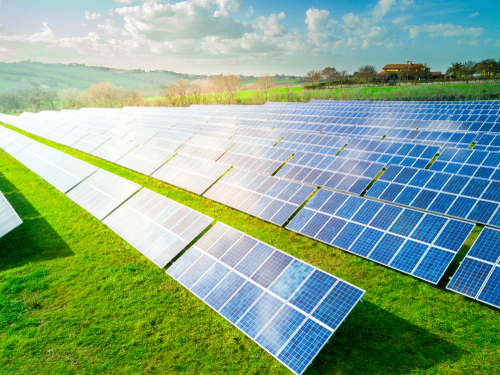
As per Solar Rooftop Photovoltaic Power Plant Regulations, plants must have a capacity between 1 kW and 1 MW, subject to the consumer’s sanctioned load and state capacity limits. Both gross and net-metering facilities can be offered to consumers by distribution licensees on a first-come, first-served basis. Consumers must install grid-connected plants as specified in the regulations and comply with relevant technical standards.
Karnataka’s Solar Policy targeted for development of 6,000 MW solar capacity by 2021 and the state surpassed the target with a solar installed capacity of 7,523 MW as on December 2021. However, the state has not launched any new independent solar policy since then. Although the state has provisions for solar energy in its latest Renewable Energy Policy (2022-2027) but more needs to be done in this regard as the state’s solar installed capacity is growing with an average of 7.10 per cent which is significantly lower than that of other leading states.
Tamil Nadu: 8.33 GW of solar installed capacity
Tamil Nadu is committed to integrating solar energy into its energy strategy for sustainable development, job creation, and carbon footprint reduction. The state has implemented the Solar Energy Policy and Grid Interactive Solar PV Energy Generating System (GISS) Regulations to govern solar installations.
The solar energy policy provides incentives like financial assistance for the installation of rooftop solar systems (particularly for residential and small commercial buildings) like exemption from electricity tax for solar power consumers for a specified period, reduction or waiver of open access charges for solar power producers, facilitating easier access to the grid and markets, exemption from cross-subsidy surcharges for solar power consumed within the state, making solar power more cost-effective.
The GISS Regulations include three primary metering mechanisms: net metering, net feed-in, and gross metering. Net metering allows domestic consumers to install systems up to their sanctioned load; net billing/net feed-in is available for most consumer categories with a maximum capacity of 999 kW or their sanctioned load, whichever is lower; and gross metering is for non-low tension (LT) consumers with system sizes between 151 kW and 999 kW. These regulations ensure structured, safe integration of solar PV systems into the grid while promoting renewable energy use.
Key details of recent solar policies in select states
| Policy | Period | Target | Segments |
| Gujarat Solar Policy 2021 | 2021-2025 | The capacity installation targets for discoms will align with the renewable purchase obligation (RPO) set by the Gujarat Electricity Regulatory Commission (GERC). MW-scale projects must be at least 1 MW, and kW-scale projects must be at least 1 KW.
|
1. Project for residential consumers
2. Captive use projects 3. Third-party sale projects 4. Projects under renewable energy certificate (REC) mechanism 5. Projects for RPO compliance
|
| Rajasthan Solar Energy Policy | 2019-25 | 30,000 MW solar power projects | 1. Rooftop pv solar power systems
2. Decentralised grid connected solar power projects 3. Off grid solar applications 4. Utility grid power projects 5. Solar power projects with storage system 6. Solar Park
|
| Karnataka Solar Policy | 2014-21 | Install 6,000 MW of solar power projects, with 2,400 MW from grid-tied rooftop projects
|
1. Grid connected, utility-scale projects
2. Grid-connected rooftop projects 3. Off grid projects
|
| Tamil Nadu Solar Energy Policy | 2019-Till Suspended | · Installed solar power capacity of 9,000 MW by 2023.
· Rooftop solar systems to reach a target of 3,600 MW from rooftop solar by 2023 · Solar parks and solar zones with a total capacity of 4,000 MW.
|
1. Rooftop solar
2. Solar parks 3. Agricultural solar initiatives |
Source: Respective state policies, Author’s compilation
Conclusion
India’s journey towards sustainable energy transition has seen remarkable progress, with visionary policies and strategic investments driving the solar revolution. States like Rajasthan, Gujarat, Karnataka, and Tamil Nadu have emerged as pioneers, showcasing significant advancements in solar energy deployment. Although southern Indian states like Karnataka and Tamil Nadu dominated the solar energy space in India their solar installed capacity growth rates have lagged behind Rajasthan and Gujarat in recent years.
Trends in installed solar capacity (MW)
| States | 2019-20 | 2020-21 | 2021-22 | 2022-23 | 2023-24 | CAGR |
| Rajasthan | 3,364.03
|
5,275.27
|
5,925.6 | 12,564.87
|
17,055.7
|
38% |
| Gujarat | 2,478.32
|
2,986.77
|
4,469.87
|
7,180.03
|
9,254.56
|
30% |
| Karnataka | 6,120.76
|
7,306.18
|
7,383.88
|
7,590.81
|
8,241.4 | 6% |
| Tamil Nadu | 2,618.71
|
3,961.56
|
4,527.47
|
5,067.18
|
6,736.43
|
21% |
Source: MNRE
Hence, these states lead in the solar sector due to clear and consistent policies that mitigate risks for renewable energy projects that they implement. Their collaborative approach between government and private sectors has effectively addressed execution challenges, enhancing the ease of doing business. Competitive bidding processes, supported by favorable policies like tax incentives and long-term power purchase agreements, further attract investments. Going forward, these states are in fact well-positioned to drive the global renewable energy narrative through ambitious clean energy targets and promising growth prospects.
Nidhi Dua is currently interning with Renewable Watch magazine.

