By Sakshi Bansal
India is required to add around 50 GW of new renewable energy capacity each year to meet its 2030 targets. Accelerating the deployment of distributed renewable energy (DRE) capacity can provide the essential momentum to accomplish this objective by helping states meet their renewable purchase obligation (RPO) targets. The RPO targets announced by the Ministry of Power in October 2023 require that 4.5 per cent of electricity be sourced from DRE by 2030.
As per the Ministry of New and Renewable Energy (MNRE), the country’s grid-connected rooftop solar capacity stood at 12.46 GW or 14.78 per cent of the installed solar capacity as of May 31, 2024, with the commercial and industrial (C&I) segment accounting for the largest share. Among the states, Gujarat is at the top, with the highest installed capacity of 3,671.4 MW, followed by Maharashtra with 2,139.79 MW, Rajasthan with 1,209.59 MW and Kerala with 675.25 MW. These states collectively account for more than half of the total rooftop solar installations in the country. The capacity additions in these states have been supported by a facilitating policy and regulatory framework, subsidies and net metering.
Meanwhile, the country’s installed capacity under the off-grid solar/Pradhan Mantri Kisan Urja Suraksha Evam Utthaan Mahabhiyan (PM-KUSUM) scheme stood at 3.17 GW, as of May 31, 2024. Among the states, Rajasthan is at the top, with the highest installed capacity of 704.75 MW, followed by Haryana with 695.89 MW, Maharashtra with 401.22 MW and Chhattisgarh with 390.73 MW. These states collectively account for 69.05 per cent of total off-grid solar installations in the country.
Recently, India witnessed key developments in the policy and regulatory framework within the distributed solar segment.
Renewable Watch provides an overview of these policy initiatives and the future outlook for the distributed solar segment…
PM-Surya Ghar: Muft Bijli Yojana
In February 2024, the government launched a landmark scheme for the segment, the PM-Surya Ghar: Muft Bijli Yojana. The scheme, with a total outlay of Rs 750 billion until 2025-26, aims to provide free electricity of up to 300 units every month to 10 million households across the country. The scheme has received an overwhelming response, with over 10 million registrations within one month of its launch in February 2024. Under the scheme, central financial assistance (CFA) of 60 per cent of the system cost will be provided for 2 kW systems while 40 per cent of the additional cost will be covered for systems of 2-3 kW capacities. The CFA will be capped at 3 kW.
The scheme will help households save on electricity bills and earn additional income through the sale of surplus power to discoms. The scheme aims to add 30 GW of solar capacity through rooftop installations in the residential sector, accounting for 10.71 per cent of the 2030 solar target of 280 GW.
Recently, in June 2024, in order to facilitate multi-state vendor registrations on the national portal for the residential rooftop solar programme, the MNRE modified the procedure document for executing the PM-Surya Ghar scheme. The ministry announced that vendors will now have the option for multi-state registration in addition to national registration. Furthermore, in May 2024, the ministry established a mission directorate to execute the PM-Surya Ghar scheme, ensure its objectives are met and manage daily operations.
Rooftop solar systems up to 10 kW exempted from mandate of feasibility study
In February 2024, the power ministry incorporated enabling provisions in the electricity consumer rules to accelerate rooftop solar development in the country. Under the amended rules, solar rooftop PV systems of up to 10 kW capacity have been exempted from the requirement of technical feasibility study, and the timeline for completing the feasibility study has been reduced from 20 days to 15 days for systems of more than 10 kW capacity.
New CFA benchmarks under Phase II of the rooftop solar programme
In January 2024, the MNRE sanctioned updated benchmarks for CFA under the rooftop solar programme. For 1-3 kW individual household projects, the updated CFA is Rs 18,000-Rs 20,000 per kW. Meanwhile, projects in the 3-10 kW range have adjusted rates of Rs 9,000-Rs 10,000 per kW. For projects up to 500 kW at resident welfare associations or group housing societies and common facilities, the CFA has been updated to Rs 9,000-Rs 10,000 per kW.
Pradhan Mantri Janjati Adivasi Nyaya Maha Abhiyan
In January 2024, the President of India granted approval to the MNRE for the execution of this initiative. With a budget of Rs 5.15 billion, this programme is designated for habitations and villages of particularly vulnerable tribal groups (PVTGs). The objective of the initiative is to provide electricity to 100,000 households belonging to PVTGs in regions where grid-based electricity supply is not considered technologically and economically viable. This will be achieved through the installation of 0.3 kW off-grid solar power systems. Additionally, the initiative involves arrangements for solar lighting at 1,500 multi purpose centres located in PVTG areas, where grid-based electricity is not accessible. The programme will be in effect during fiscal years 2023-24 through 2025-26.
Amended guidelines for the implementation of the PM-KUSUM scheme
In January 2024, the MNRE introduced amended guidelines for the implementation of the PM-KUSUM programme. The goal of Component A is to enable farmers to install 10,000 MW of decentralised ground or stilt-mounted grid-connected solar power plants, or other renewable energy-based power plants, on their land. Renewable power generators will establish these plants, with capacities ranging from 500 kW to 2 MW, within a 5 km radius of substations. This placement is intended to reduce transmission costs and losses.
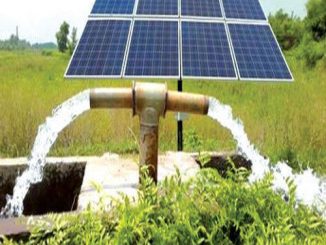
Within Component B, individual farmers will receive assistance to install 1.4 million stand alone solar agricultural pumps or replace existing diesel agricultural pumps or irrigation systems in off-grid areas where grid supply is unavailable. Pumps with capacities exceeding 7.5 HP may be permissible, but the CFA will be restricted to the subsidy applicable for a 7.5 HP pump. Individual farmers in the north-eastern region, hilly region such as Jammu & Kashmir, Ladakh, Uttarakhand and Himachal Pradesh, and islands such as Andaman & Nicobar and Lakshadweep, can avail the CFA for pumps with a capacity of up to 15 HP. However, the CFA for pumps up to 15 HP will be limited to 10 per cent of the total installations.
Component C focuses on the solarisation of 3.5 million grid-connected agricultural pumps, providing reliable solar energy to farmers during daytime. This component encompasses both individual pump solarisation and feeder-level solarisation. The guidelines underline the distribution of CFA depending on benchmark costs or tender costs, and suggest the use of GPS surveys to ensure accurate calculations of feeder load and distribution losses.
The way forward
A report on rooftop solar potential in the residential sector by the Council on Energy, Environment and Water indicates that India has over 100 GW of economic potential for rooftop solar in the residential sector. This highlights a significant opportunity, especially compared to the current 3 GW of rooftop solar installations by households.
However, there are significant challenges impeding the adoption of distributed solar in India. These include high initial expenses for the residential sector, limited access to affordable financing and the complex processes of discoms. Additionally, consumer awareness and readiness to embrace these technologies remain low throughout the country. Regulatory challenges, such as varying net metering policies across states, also impede the growth of this sector. Moreover, state-owned electricity discoms may delay or even deny net metering approval due to apprehensions about revenue loss from their valuable C&I consumers.
Overall, unlocking the complete potential of this segment will require India to introduce innovative business models such as the community solar model. This approach can effectively address issues such as financial accessibility and insufficient roof space. It will also address discoms’ concerns regarding revenue decline, while promoting the rapid deployment of rooftop solar. Virtual net metering is another model that can help bridge the gap between utility-scale and rooftop solar installations, enabling consumers to establish larger installations and leverage economies of scale.
To address the information gap, states should establish a comprehensive platform for rooftop solar that offers fundamental, reliable and engaging information. Governments can also introduce financial measures aimed at assisting households in accessing capital for infrastructure at favourable rates. Additionally, streamlining approval processes and providing quality assurance through the development of testing facilities is essential for the uptake of this segment. Furthermore, given that the economic potential of rooftop solar is greatest in the 1-2 kW category (according to the CEEW report), the integration of micro inverters and compact inverters will be crucial for enhancing system performance and affordability.
Going forward, the future looks promising owing to recent encouraging policy developments, but continued efforts will be required to address challenges, foster innovation and achieve the revised targets of 40 GW rooftop solar capacity and 34,800 MW PM-KUSUM solar capacity by 2026.